
ULSACMUN 2018


United Nations Entity for Gender Equality and the Empowerment of Women
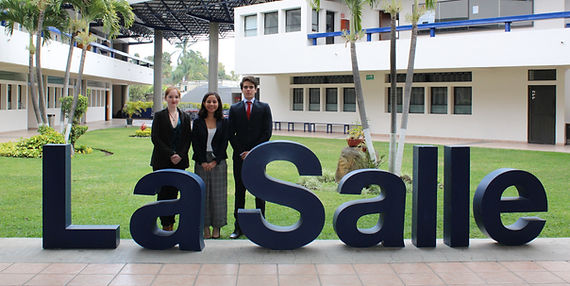
Chair
President: Yunuén Hernández Ibáñez
Moderator: Tamara González Cano
Conference officer: David Antillón Pérez
Contact your Chair at:
Topic A: Strategies for the promotion of new dynamics in gender roles.
The purpose for the opening of this topic is to create a resolution that contributes to the creation of strategies to support everyone that wants to pursue a career and, at the same time, have a family. This job is justified when we make an evaluation about the growing number of women that want to develop a professional life in which the goal is to get a PHD. Likewise, there is a growing number of the so called “stay-at-home dad”, concept that refers to a man that leaves it's career a side to take care of the house and the kids.
It is true that the percentage of woman that leave their studies or their work life to take care of the house and the kids is much smaller in comparison to other years, but it is also true that, in many countries, the percentage of literacy of women is way below than the one of men's. As an example, in Chad, according 2014 data, literacy of men is in 38.92 % while the one of women is at 13.93 %.
For the correct development of the topic, it is important to create strategies that allow the development of men and women in subjects like: family, academic formation and a working career. The purpose of these strategies is to fight the idea that we can't have both things in our life: a family and a career or, even worse, that each one of those “paths” is made exclusively for only one of the genders.


Topic B: Gender equality and women empowerment as a base for a sustainable society.


UN Women has been working now for seven years in this topic. It can seem like a lot time for some people, but it is really a relative short time to obtain solid results. Since 2010 it was published, as part of the events of Women´s Day, a document called Calvert Women’s Principles, in order to motivate executive women to form part of every work team with equal opportunities as men. Also, recent investigation proves that gender diversity help companies to upgrade their results and point out that personal and common interest can come by hand.
It will be the delegates’ objective to discuss this topic that affects the development of women´s empowerment as its related to other problems such as gender violence, lack of confidence in institutions and official mechanisms, the absence or inefficiency of each country´s laws, etc.
By discussing this topic, we hope to come with a proposal that will make women feel empowered within the place in which they live and that the Member States represented in this committee can realize about the importance of advancing in these topics and putting the bases of an international sustainable community.
Summoned delegations
1. Afghanistan (topic A) / Republic of Niger (topic B)
2. Angola (both topics)
3. Australia (both topics)
4. Bangladesh (both topics)
5. Colombia (topic A)/ Centroafrican Republic (topic B)
6. Finland (both topics)
7. France (both topics)
8. Germany (both topics)
9. Guatemala (both topics)
10. Honduras (both topics)
11. Hungary (both topics)
12. International Labour Organization (both topics)
13. Italy (both topics)
14. Japan (both topics)
15. Mexico (both topics)
16. Norway (both topics)
17. Paraguay (topic A)/ Chad (topic B)
18. People's Democratic Republic of Lao (topic A)/ Sierra Leona (topic B)
19. People's Republic of China (both topics)
20. Poland (topic A)/ Burkina Faso (topic B)
21. Russian Federation (both topics)
22. Slovenia (both topics)
23. Spain (topic A)/ Burundi (topic B)
24. United Kingdom of Great Britain (both topics)
25. United States of America (both topics)
Delegations that appear in yellow have already been assigned.
 |  |  |  |  |
|---|